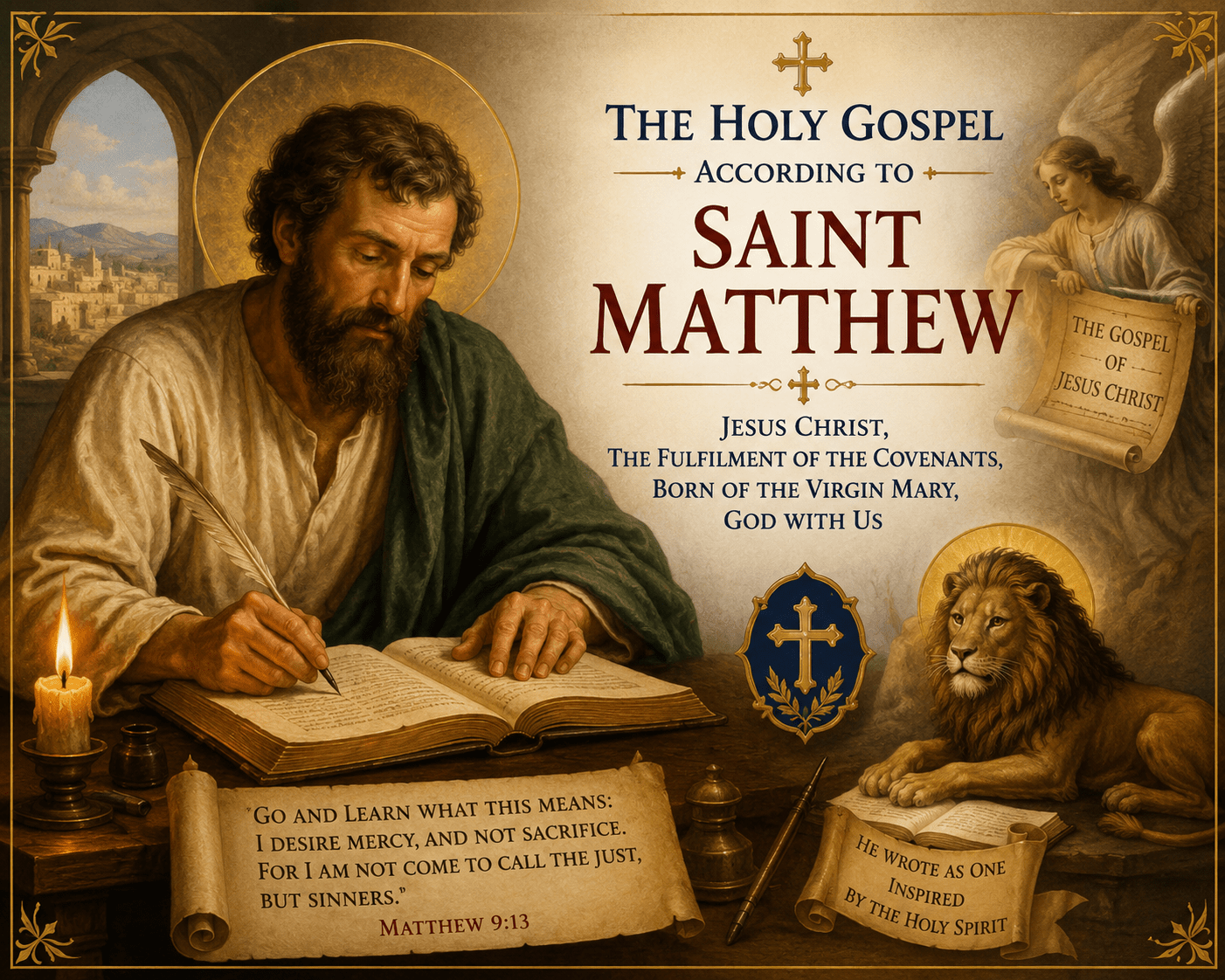
Teaching Children and Beginners the Catholic Faith Through the Opening of Saint Matthew
Many parents and catechists become intimidated when teaching Scripture because they feel they must explain everything academically.
But Matthew Chapter 1 does not need to be taught with complexity first.
Children and beginners need:
• clarity
• repetition
• beauty
• reverence
• simple truths presented faithfully.
The goal is not merely information.
The goal is:
helping souls love Jesus Christ and His Church.
1. What Children Should Learn First From Matthew 1
Do not begin with complicated apologetics immediately.
Begin with the central truths.
Children should first understand:
Jesus is the promised Saviour sent by God.
Everything else flows from this.
The Core Truths to Teach
By the end of Matthew 1, children should understand:
• Jesus is truly God
• Jesus truly became man
• Mary is His Virgin Mother
• Joseph protected Jesus and Mary
• God keeps His promises
• Jesus came to save us from sin
• God is with us.
Keep returning to these truths repeatedly.
2. How to Explain the Genealogy to Children
Children often become confused or bored by genealogies.
Do not begin by reading every name with long explanations.
Instead explain:
The genealogy is Jesus’ family history.
Simple Explanation
You might say:
“Matthew begins by showing that Jesus really came into human history. God prepared for His coming for many centuries.”
Then explain:
“All these generations show that God was guiding history toward Jesus.”
Important Lesson for Children
God works patiently.
Even when people sinned or failed, God still carried out His plan.
This helps children understand:
• providence
• mercy
• faithfulness.
Practical Activity
For younger children:
• draw a family tree
• explain ancestors
• compare with Christ’s genealogy.
This helps them understand:
Jesus truly entered human history.
3. Teaching the Virgin Birth
This must be taught:
• reverently
• simply
• clearly.
Avoid embarrassment or awkwardness.
Children usually accept mysteries more easily than adults when taught peacefully.
Simple Explanation
Say:
“Jesus had no earthly father because He is the Son of God. Mary conceived Jesus through the power of the Holy Ghost.”
Do not overcomplicate.
Important Point
Teach:
this was a miracle.
God acted directly.
Avoid Modern Reductionism
Do not present the Virgin Birth as:
• symbolic only
• poetic imagery
• merely inspirational.
Children deserve the truth clearly.
4. Teaching About Saint Joseph
Many children understand Mary more easily than Joseph.
But Joseph is enormously important.
Especially for boys and fathers.
What Joseph Teaches
Saint Joseph teaches:
• obedience
• courage
• protection
• purity
• hard work
• quiet holiness.
Important Lesson for Boys
Modern culture often gives boys poor models of masculinity.
Joseph shows:
true strength protects and serves.
Important Lesson for Fathers
Fathers should especially meditate on Joseph because he teaches:
• leadership through holiness
• sacrificial love
• spiritual protection of the family.
Family Discussion Questions
Ask children:
• Why do you think Joseph obeyed God so quickly?
• What makes Joseph brave?
• How can we imitate Joseph in our family?
5. Teaching Mary Properly
Children should learn to love Mary naturally and confidently.
Many Catholic parents become hesitant because of Protestant objections.
Do not teach Mary defensively.
Teach her biblically and lovingly.
Simple Truths About Mary
Teach children:
• Mary is the Mother of Jesus
• Jesus is God
• therefore Mary is Mother of God incarnate
• Mary always points us toward Jesus.
Clarify Worship and Honour
Children should learn early:
“We worship God alone. We honour Mary because God honoured her first.”
This simple explanation prevents much confusion later.
Marian Practices for Families
Encourage:
• family Rosary
• Marian feasts
• simple Marian prayers
• images/statues used reverently.
6. Teaching “Emmanuel”
God With Us
This is one of the most important truths in Matthew 1.
Children need to hear repeatedly:
God is with us.
Explain Simply
Say:
“Jesus is not merely a good man. Jesus is God who came to live among us.”
Connect to the Eucharist
Very important for Catholic children.
Explain:
“The same Jesus who came to us through Mary remains with us in the Eucharist.”
This builds Eucharistic faith early.
7. Teaching About Sin Properly
Matthew says:
“He shall save his people from their sins.”
Children must learn about sin truthfully but not despairingly.
Avoid Two Errors
Error 1:
Never speaking about sin.
This produces shallow Christianity.
Error 2:
Speaking about sin harshly without mercy.
This can create fear or scrupulosity.
Proper Catholic Balance
Teach:
• sin is real
• sin hurts us
• Jesus came to save us
• God forgives repentant sinners.
Always connect repentance to mercy.
8. Teaching Through the Liturgical Year
Matthew 1 is especially suited for:
• Advent
• Christmas
• Marian feasts
• Saint Joseph’s feasts.
Advent Family Practices
During Advent:
• light Advent candles
• pray Matthew 1 slowly
• discuss waiting for Christ
• prepare spiritually for Christmas.
Christmas Teaching
Teach children:
Christmas is about the Incarnation.
Not merely:
• presents
• sentiment
• decorations.
God became man for our salvation.
9. Helping Teenagers Engage Matthew 1
Teenagers often struggle with:
• boredom in Scripture
• scepticism
• cultural confusion.
Matthew 1 answers many modern problems.
Important Themes for Teenagers
Identity
Jesus knows human history personally.
Purpose
History is not meaningless.
Obedience
Joseph shows strength through fidelity.
Purity
Mary and Joseph witness holiness in a confused world.
Truth
Christianity is rooted in real history, not mythology.
Good Discussion Questions for Teenagers
• Why does modern culture resist obedience?
• Why does purity seem difficult today?
• What kind of masculinity does Joseph model?
• Why does the Incarnation matter?
• Why do people reduce Jesus to merely moral teacher?
10. Teaching Beginners and Converts
Many adult beginners know very little biblical background.
Never assume knowledge.
Explain terms patiently.
Helpful Beginner Definitions
Messiah
The promised Saviour sent by God.
Incarnation
God becoming truly man.
Covenant
A sacred relationship established by God.
Emmanuel
“God with us.”
Fulfilment
God completing His promises in Christ.
Important Advice for Catechists
Do not overwhelm beginners immediately with:
• technical theology
• excessive debates
• complicated terminology.
Begin with:
Christ Himself.
11. The Domestic Church
The Catholic Home as Place of Faith
Parents are the first teachers of the faith.
Children learn Christianity first from:
• the atmosphere of the home
• prayer habits
• reverence
• example.
Practical Catholic Home Practices
Encourage:
• crucifix in home
• prayer before meals
• Sunday Mass faithfully
• confession regularly
• Scripture reading
• family Rosary
• liturgical seasons observed.
Most Important Principle
Children remember:
• what parents live
more than
• what parents merely say.
12. Do Not Teach the Faith Fearfully
Many Catholics today teach defensively because they fear criticism.
Teach confidently.
The Catholic faith is:
• beautiful
• coherent
• biblical
• historical
• life-giving.
Children should feel:
joy and reverence in the faith.
13. Most Important Lessons to Leave With Children
If children remember only a few things from Matthew 1, let them remember:
Jesus is truly God.
Jesus became man to save us.
God keeps His promises.
Mary and Joseph obeyed God faithfully.
God is with us.
We belong close to Jesus and His Church.
Final Advice for Parents and Catechists
Do not worry about teaching perfectly.
Teach faithfully.
Children grow gradually into the faith.
What matters most is:
• consistency
• reverence
• prayer
• sacramental life
• love for Christ.
God works slowly through families just as He worked slowly through salvation history.
Prayer for Parents and Catechists
Lord Jesus Christ,
who camest into the world through the obedience of the Blessed Virgin Mary and Saint Joseph,
strengthen all Catholic parents, teachers, and catechists.
Grant them wisdom, patience, courage, and fidelity
as they hand on the faith to the next generation.
May Catholic homes become places of prayer, truth, reverence, and holiness.
Keep children close to Thy Church,
faithful to Thy sacraments,
and steadfast in love for Thee all the days of their lives.
Who livest and reignest for ever and ever.
Amen.

 St. Mary's, St. John Bosco and St. Edward's